
So, I’m actually home safe and sound, having arrived at 2 am to -10 degrees and blowing snow. But got behind in my blogging, so am writing this while starting the many loads of laundry I have to do now that I’m home.
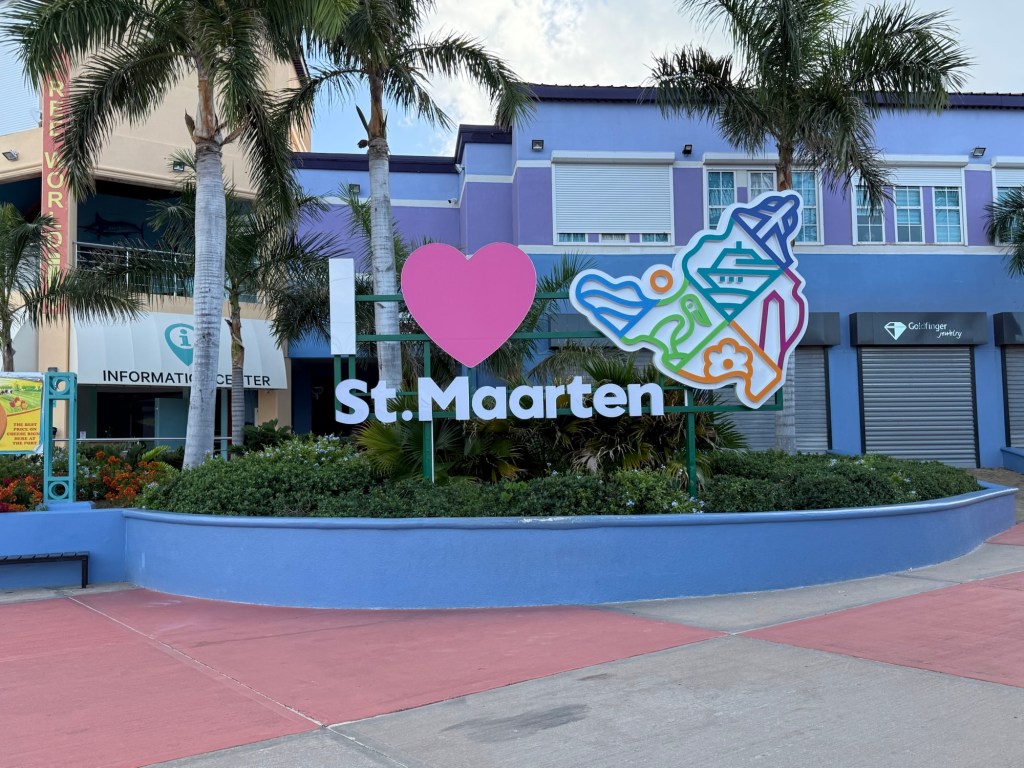
Our final port of call on this cruise was St Martin, an island split between France and Holland, it has a population of only about 80,000. But each year, more than 2 million tourists visit the island countries, many fly into Princess Juliana International Airport, but the majority arrive, as we did on a passenger ship. They can have up to 6 of the biggies on any given day.
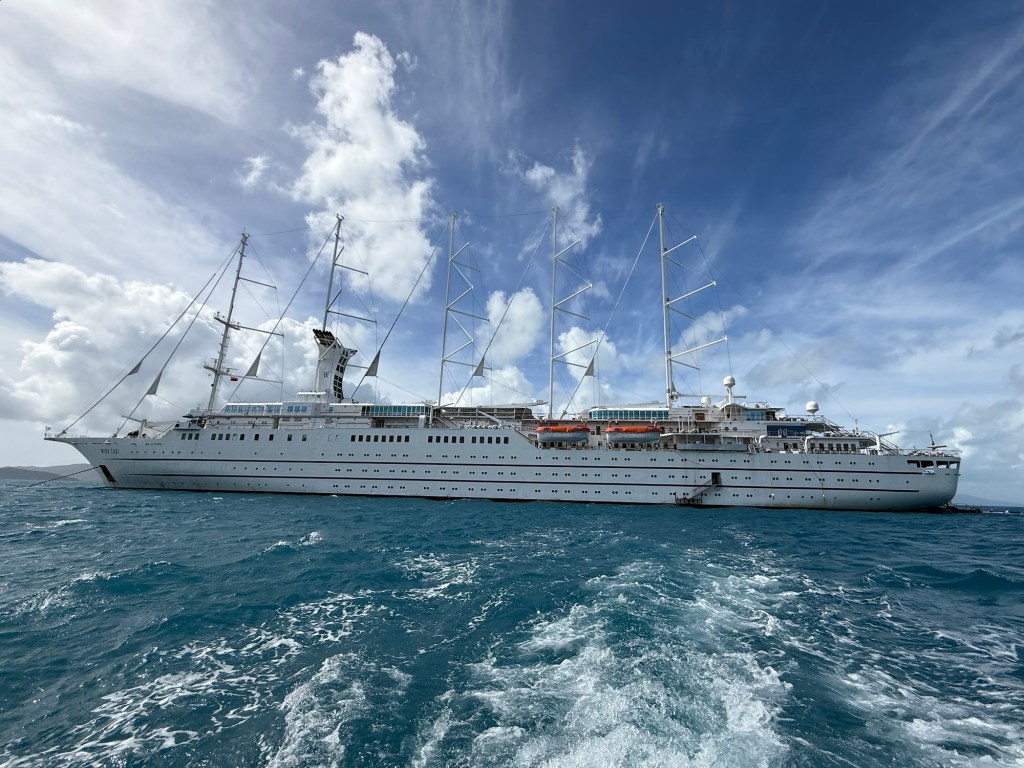
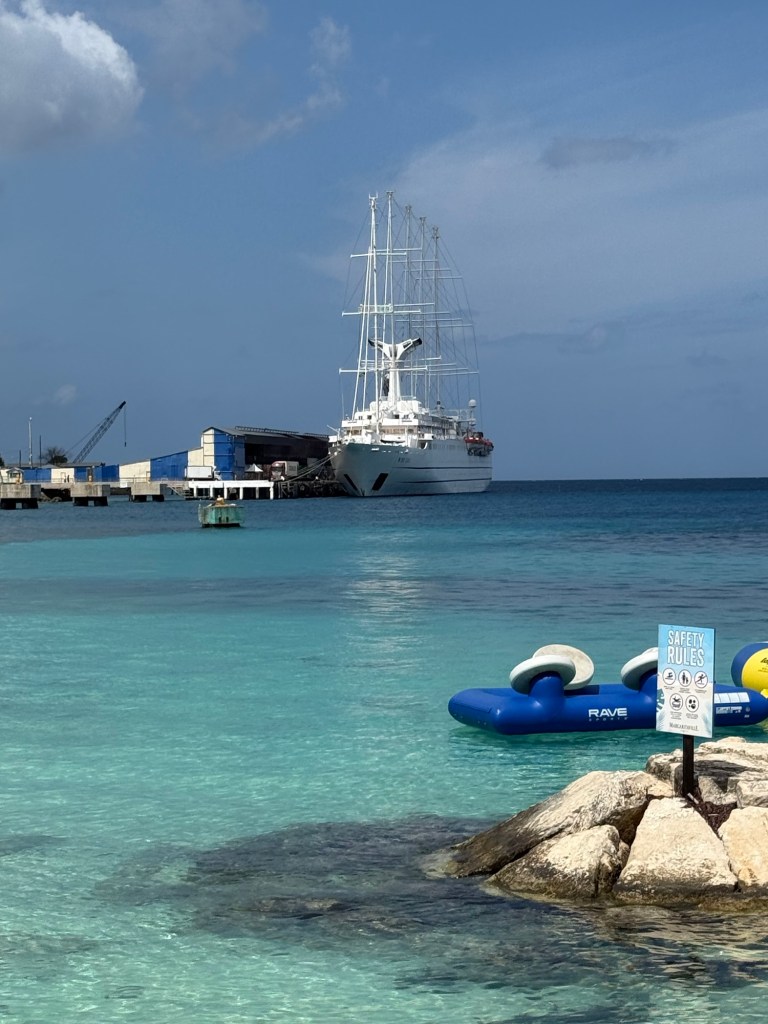
Yesterday there were actually 3 Windstar ships in port which is an incredibly uncommon occurrence. The Wind Spirit joined us early in the morning so I saw her in port, but later in the day, the newest ship in the fleet, the Wind Seeker, pulled in behind the Wind Spirit in a docking location where one of the big ones usually ties up. Sorry I missed seeing her.


The infrastructure of the island is not sufficient to deal with all those visitors. The traffic was horrendous, and the airport, although recently opened at twice the size of the previous one, was overflowing with people without seating and air conditioning for it seemed like half the people. Because the post-security areas are so congested I suspect, they don’t let anyone check in until 3 hours before their flights and so the pre-security areas is crazy busy with hardly any seating and limited eating opportunities. And most cruise ships want you off by 9 am and hotels have 11 checkout and flights not going out til 4 or 5.

Anyway I’m ahead of myself.
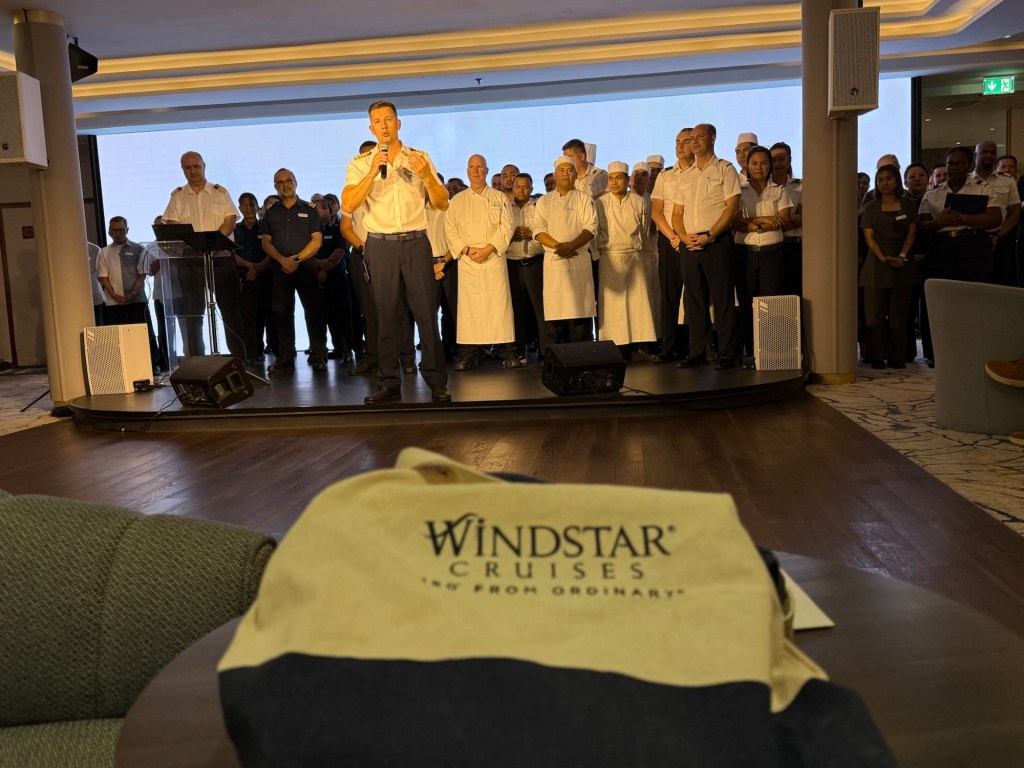
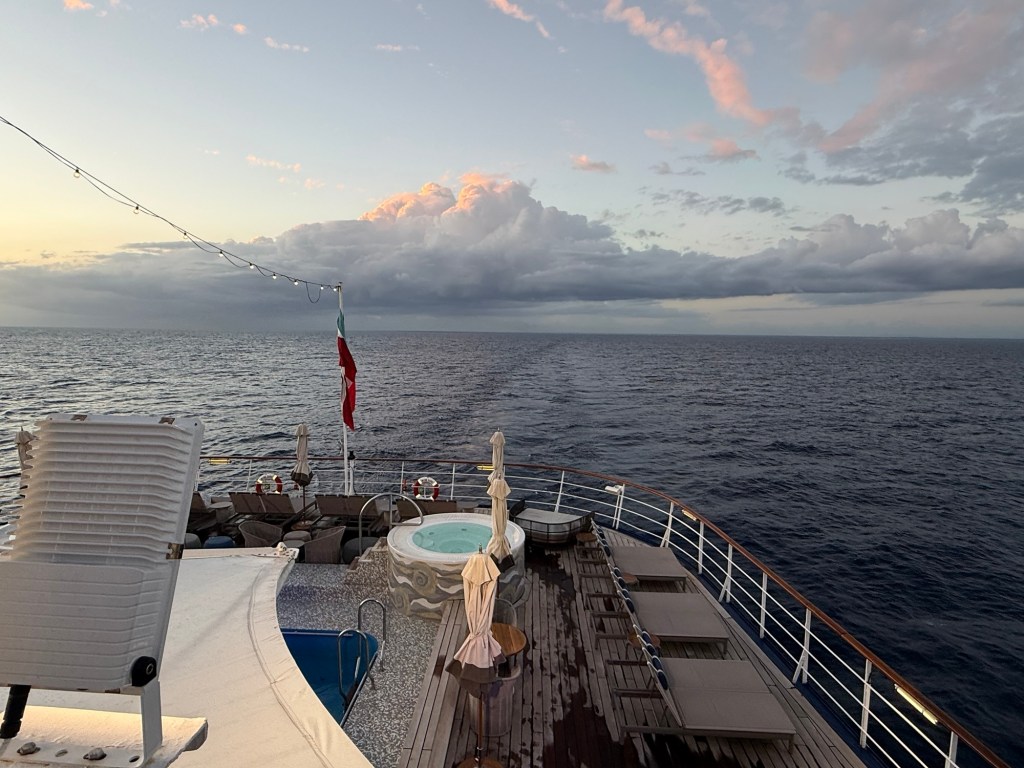
Departing the ship is incredibly tough, especially after 19 days. The Captain, General Hotel Manager, and Housekeeping Manager were on hand to wish us good bye, and the General Hotel Manager gave me a big hug. We had a lovely dinner with him mid-cruise (one of the perks of being a loyal customer) and now we’re best buddies. The Captain also gave me a warm good bye even though one evening I had the audacity to ask him if we were going in the right direction! Clair and I were sitting on the deck one evening when the Captain was strolling the deck (he’s out and about a lot and totally accessible with an open bridge policy). We had just noticed that we had continued in a northerly direction from Cozumel because we could still see the lights of the mainland of Mexico. We knew that leaving from Cozumel we should be turning east to head toward the Caymans. After some joking that he had no idea where we were because he’d been sleeping all day (a common thread of his comments is that his crew on the bridge does all the work), he told us that there was a marine conservation park that we needed to go around before heading east. He even called us out at the Captain’s reception the next night in a teasing way and I know I turned bright red and it wasn’t from the sun.
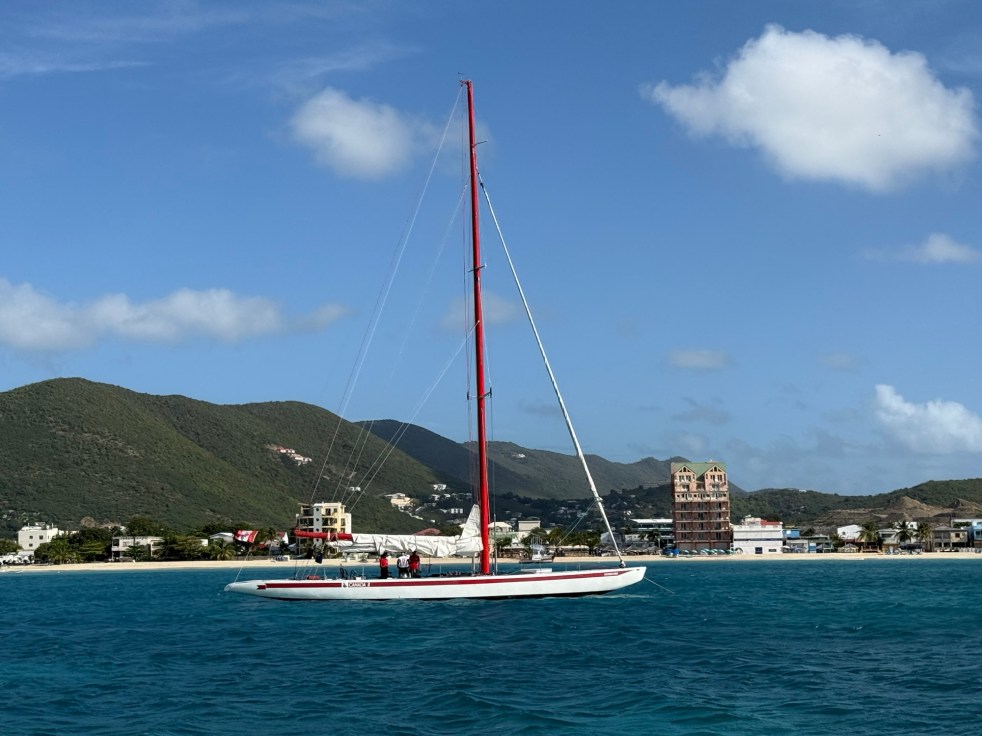
But I had one last hurrah before heading to the airport to catch my 5 pm flight. I signed up to participate in a sailboat race on one of the retired 12 Meter America’s Cup boats living in St Martin. This was not a sit and watch for a lovely sight seeing kind of experience, it was a full on participatory adventure. I should also add, that I have very little sailing experience and I have to admit that I was a little nervous about it all, but hey, pushing outside our comfort zone is what travel experiences is all about. I should also point out that my terminology might be wrong in a number of instances in this post!

So we were ferried out to the two boats, Canada II and Stars and Stripes, after being split into two groups – the Canadian and American teams. They thought they were just going to arbitrarily divide the group of 30 into the two teams, but the Canadians, me included, insisted on going on Canada II. There were only 5 of us, but we were mighty! As we were walking to the dock, one of the Americans joked that if the Canadian boat lost then Canada should become the 51st state. I said loud enough for several people to hear, “I bet he thinks he’s funny” and got some knowing nods from people. After 19 days on the Windsurf there had been no animosity among the mostly American and Canadian guests and I was kind of surprised to see it come out at this point. Anyway, I put it aside and carried on.

On our way out to the boats, the captain for each boat went through the participants on his boat and assigned each person to a role. He did a great job of assessing people quickly. He said to me and 3 others, “you’re in the back with me”. I had no idea what that meant. I couldn’t hear what the other roles were, except I heard someone assigned as the bartender. (There wasn’t a lot of time for even passing out water!)
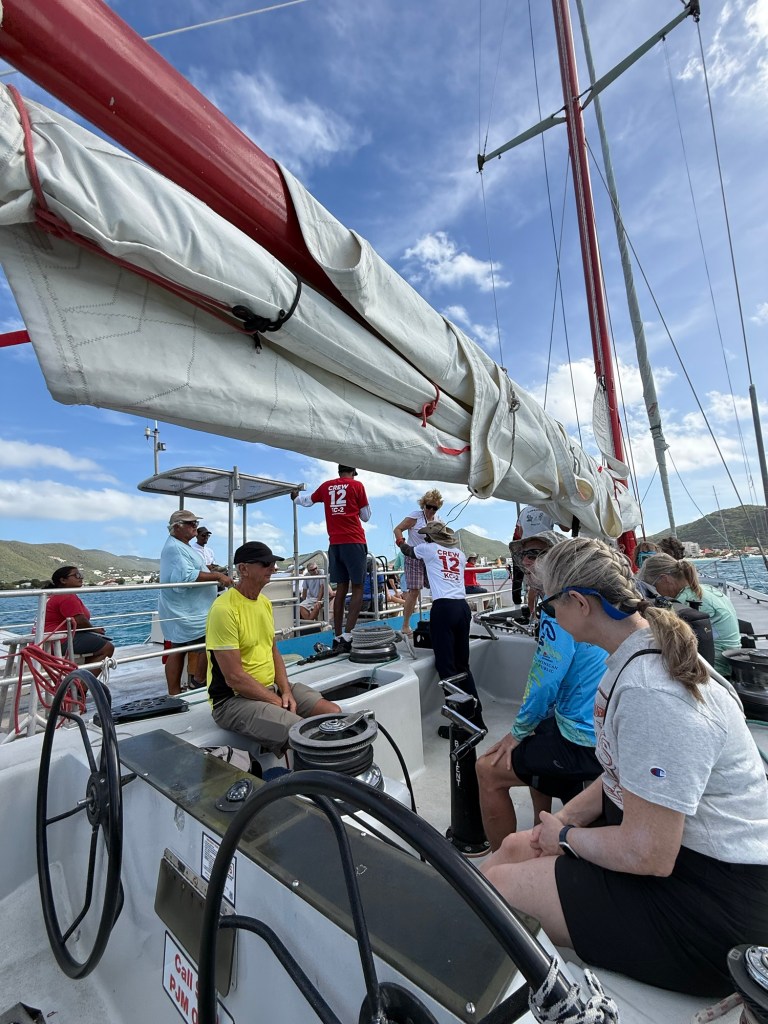
After transferring to the 12 meter old, but still amazing looking boats, the captain and 2 other crew members filled everyone in on their jobs on the boat. I was assigned to what I think was a tailing winch along with another fellow newbie. I was responsible for setting, and releasing the winch and the other with using the handle to tighten the line. It seems like a simple task, but under the pressure of the moment, I was sweating it out worried whether I would do the right thing when called upon. Haha, he forgot to tell me that at times I’d have to pull the line to tighten it up on the winch and had to call to me twice at one point because I didn’t know he was talking to me. Very stressful! But the Captain’s manner was really great, and he was being careful to make sure we stayed safe. As he said, he hadn’t lost anyone overboard in the several years he’d been doing this, and no one had lost any body parts, and believe me there was the opportunity to do either of those things if not careful.
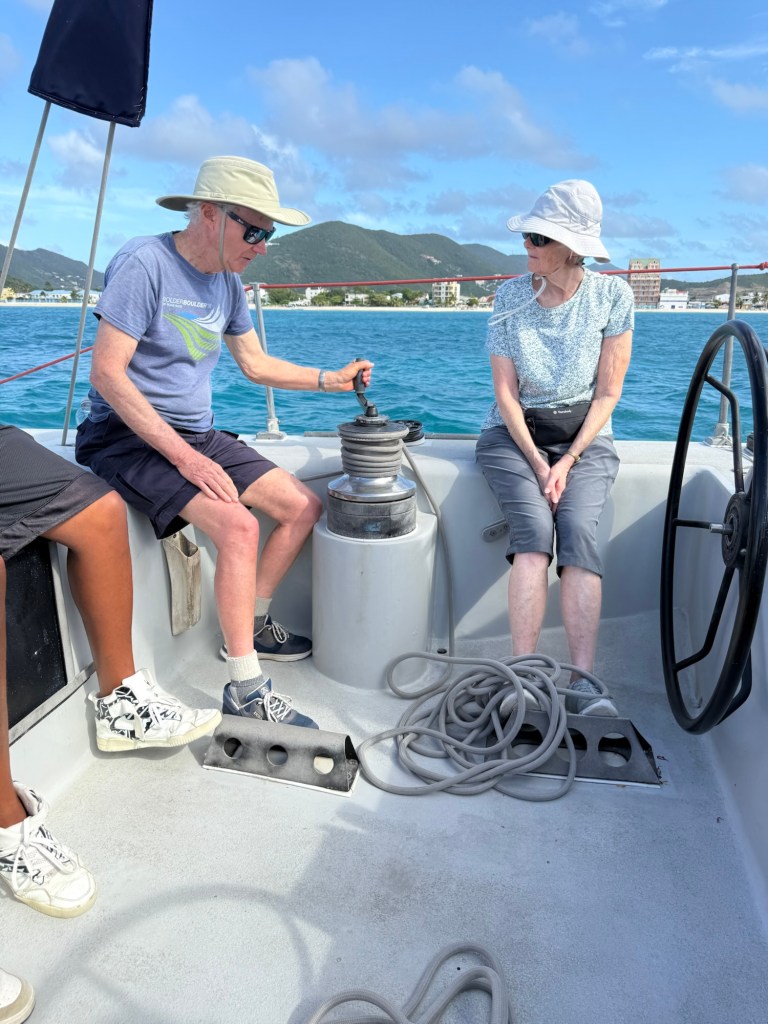

After both boat’s new crew had been trained, we were off for the starting line. We did several circuits of the course which involved both tacking legs and down wind runs and of course rounding two buoys. It was very intense at times, and I discovered what the metal foot braces on the floor of the boat were for. We were so heeled over so far that I was practically vertical pressing into the braces with my feet, and hanging on to the life line for literal dear life. There were yelled instructions to each of the teams making adjustments as we went with the crew doing the bulk of the heavy work, and helping out where some of the crew weren’t that great at their jobs (like the fellow that was supposed to be using the handle on the winch to tighten the line and kept turning it the wrong way and too slowly – I even reached over and moved it the right way and helped him winch at one point).
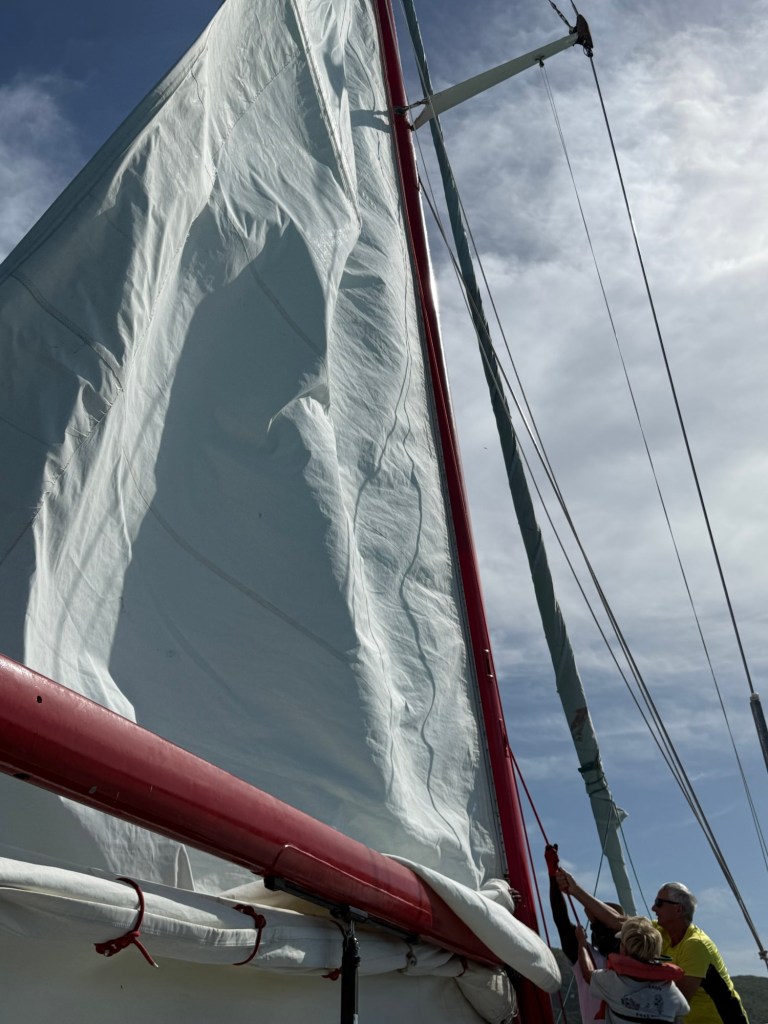

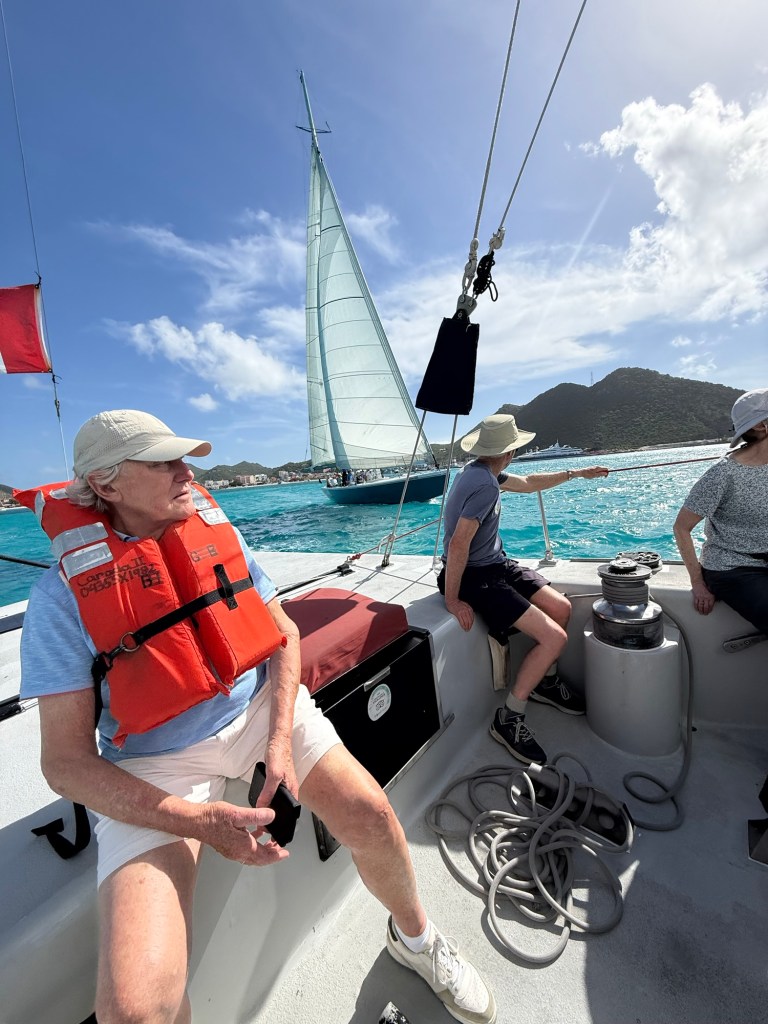
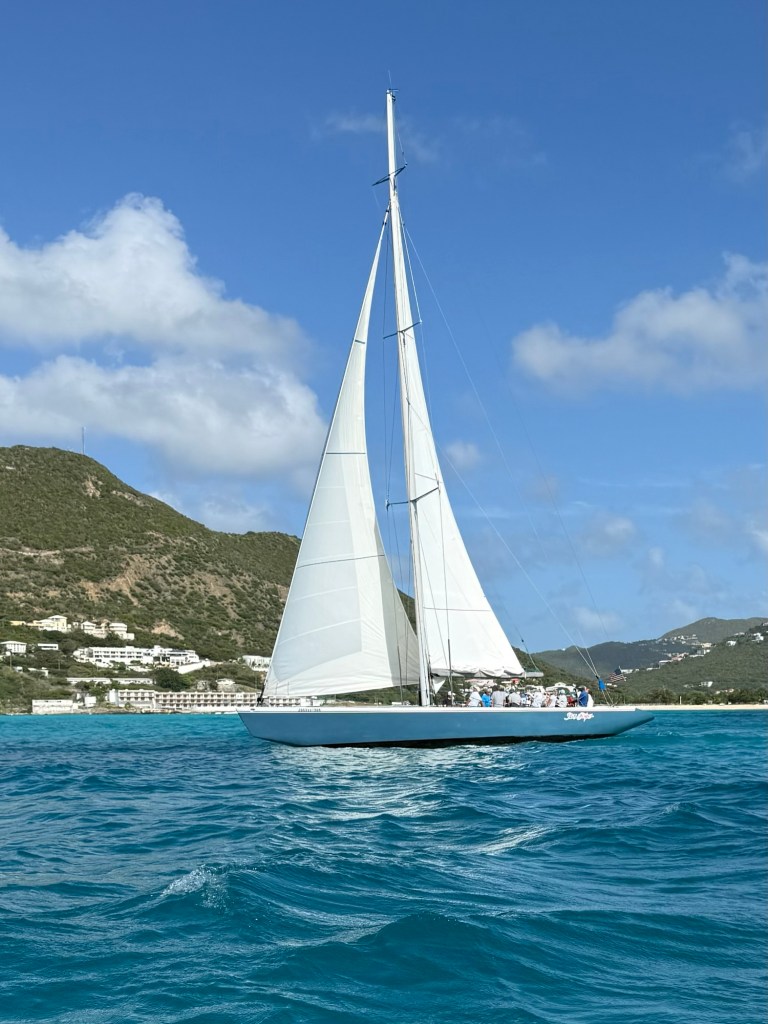


There was the snap of the sails, the wind in our faces, the occasional cold splash of some waves breaking over the boat and being so heeled over I thought for sure we were going to go over. And we were going fast! You’ll notice there aren’t a lot of pictures during this time because my hands were busy either releasing, setting up, pulling or hanging on for dear life. What. A. Rush.
In the end, I guess the Stars and Stripes won, but we were at totally different parts of the course at times and I lost track of how often we’d rounded buoys, and was surprised, and totally disappointed when he said, “OK, everyone can stand down and we’ll take her in.”
What an amazing experience! So glad I put up with being sweaty, and salt sprayed as I made my way home on two flights and didn’t get home til 2 am.
What a great way to end the 3 weeks. Thanks for coming along on this journey with me again.
With all that’s going on around us in the world, travel is getting more “interesting” but I refuse to give up exploring. Where shall we go next?






























































 Lois' Adventures